Getting around Austria with your dog: buses, trains and cable cars
Travelling through Austria with your dog by train, bus or gondola? Find out which rules apply to muzzles, pet carriers and dog tickets.
This blog was written by Bjorn Schwarte, co-founder of Ferienhaus-Tirol.eu.
Taking a regional bus to a walking trail, catching a train to your next destination or riding a gondola up the mountain: you can reach many places in Austria with your dog without using a car. Knowing the transport rules and preparing your dog for the journey can make public transport a useful part of your holiday plans.
However, the conditions are not the same everywhere. Whether your dog needs a ticket, can travel in a pet carrier or must wear a muzzle depends on the operator and the service.
Still looking for a base for your trip? Explore all dog friendly holiday homes in Austria.
1. Can your dog travel on buses and trains in Austria?
Many Austrian transport operators allow dogs to travel. They often distinguish between small animals in suitable carriers and dogs travelling outside a carrier. The latter generally need a lead and muzzle, and a separate fare may apply.
Before an outing, check these 3 things:
- Permission: Is your dog allowed on the planned service?
- Equipment: What requirements apply to carriers, leads and muzzles?
- Tickets: Does your dog need a separate ticket?
If your journey involves several forms of transport, check each section. The rules for the train may differ from those for the connecting regional bus or cable car.
2. Small dogs: a pet carrier rather than simply sitting on your lap
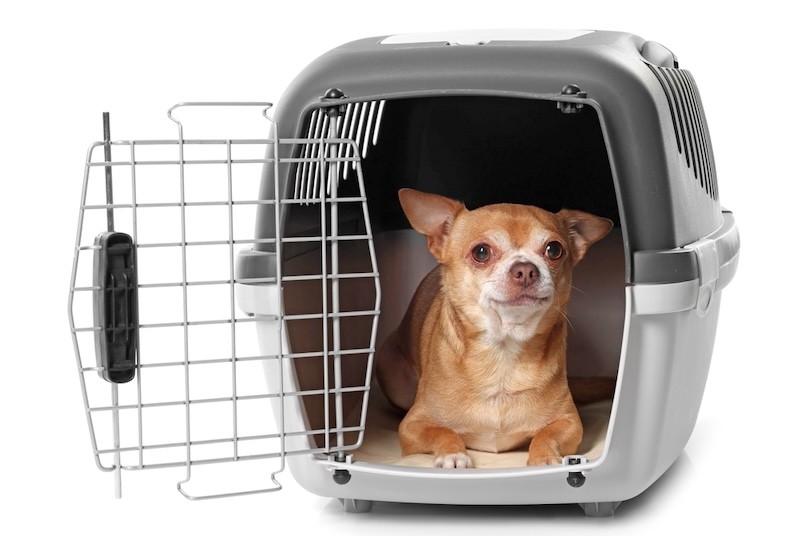
A small dog does not automatically travel free just because they fit on your lap. On ÖBB services, small, harmless animals can travel free in suitable carriers. If your dog travels outside a carrier, they need a ticket and must be secured with a lead and muzzle
Wiener Linien also allows small dogs to travel free in suitable pet carriers. Your dog’s size alone is therefore not enough to qualify.
If you want to use a carrier bag or crate, check the operator’s requirements. Help your dog get used to it at home so it provides a familiar place during the journey.
3. Leads and muzzles: what should you know?
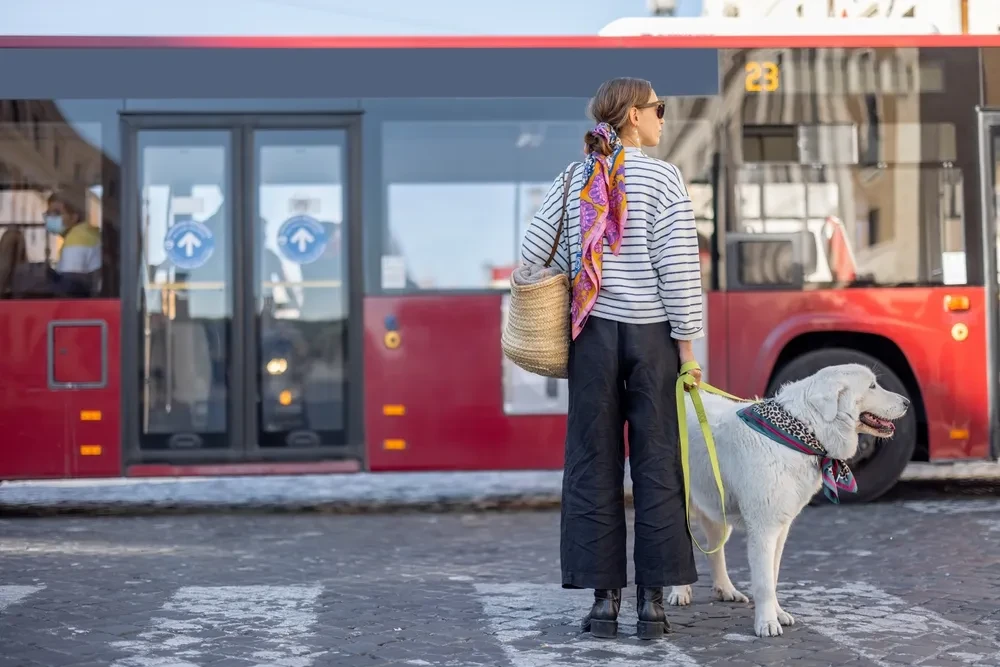
If your dog travels outside a suitable carrier, many operators require both a lead and a muzzle. This applies to ÖBB and Wiener Linien, for example. Small dogs are also subject to this rule when travelling without a suitable carrier.
Simply carrying a muzzle in your bag or putting it on only when asked is not sufficient where wearing one is compulsory. Follow the applicable conditions throughout the journey.
Introduce the muzzle before your holiday
Practise wearing it gradually and build positive experiences before your first bus or train journey together. This means your dog will not have to adjust to an unfamiliar muzzle, vehicle noises and crowds of strangers all at once.
A suitable muzzle must provide enough room for your dog to pant and drink water. Make sure it fits securely and comfortably.
Remember that rules may already apply inside stations. Wiener Linien’s lead and muzzle requirements also extend to its facilities, including underground stations and lifts.
4. Does your dog need a ticket?
There is no single answer for the whole of Austria. Some operators charge for dogs, while others allow them to travel free under certain conditions.
Travelling with your dog on ÖBB trains
Dogs can travel on most ÖBB trains. Small animals in suitable carriers travel free. Dogs outside carriers need a separate ticket. Your dog must remain on the floor under your supervision and cannot occupy a seat.
When booking, check which dog fare applies to your connection. For international journeys, also check the conditions of the other railway companies involved.
Travelling with your dog in Tyrol
According to Verkehrsverbund Tirol, dogs travel free within its transport network but must be on a lead and wear a muzzle. For journeys beyond the network, the relevant operator’s conditions apply. Free travel is therefore not guaranteed on those services.
Even if your guest card gives you free travel, check your dog’s fare separately.
5. Regional buses, hiking buses and ski buses
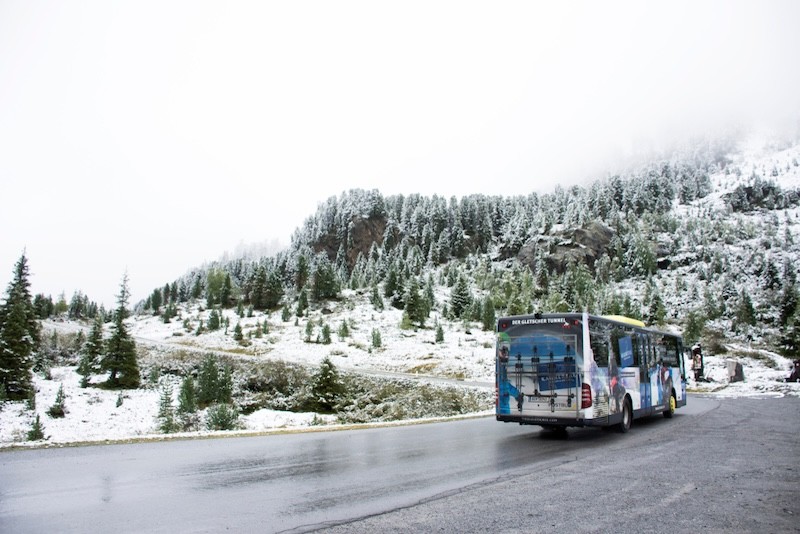
A bus to a walking area can be a practical alternative to driving. Check who operates the route, which transport conditions apply and whether your dog needs a ticket.
Plan your return journey at the same time. Check the last service and allow enough time between finishing your walk and the bus departure. For a more comfortable journey, you can:
- Choose a quieter service where possible.
- Give your dog a toilet break before departure.
- Keep some distance from other passengers when boarding.
- Find somewhere your dog can lie safely without blocking the aisle.
- Bring water and a bowl for longer outings.
On a ski bus, ski boots, skis and passengers standing close together can be particularly unfamiliar for your dog. A quieter service may make for an easier introduction.
6. Can your dog travel in a gondola or on a mountain lift?
Many mountain lift operators allow dogs. However, each operator sets its own conditions. Check beforehand whether your dog can use the specific lift and which requirements apply to tickets, leads and muzzles.
At Schmittenhöhe, for example, dogs need a separate ticket, and leads and muzzles are compulsory in the cable cars.
SkiWelt Wilder Kaiser–Brixental shows how conditions can vary even within one holiday region. Some mountain lifts carry dogs free, while others charge a separate fare.. All information on Skiwelt.at
Check gondolas and chairlifts separately
Permission to take your dog in a gondola does not automatically apply to an open chairlift. Ask the operator of the particular lift whether and how dogs are transported.
Also consider whether the journey suits your dog. Small cabins, moving boarding areas and other dogs nearby can be unfamiliar. Allow plenty of time and check whether a suitable route for your outing starts at the top.
For advice on planning a walk, read our blog “Hiking in Austria with your dog: what should you consider?”
If you are visiting in winter, also read “Ski holidays with your dog in Austria: how to plan relaxed winter days”.
7. How to prepare your dog for the journey
If your dog is unfamiliar with public transport, start with a short journey where possible. A quiet service covering just a few stops offers a manageable introduction.
Help your dog get used to the carrier or muzzle beforehand. On the day, allow enough time to reach the stop or station and board without rushing.
A familiar small blanket can help mark out a resting place during the journey. Keep your dog close and allow space between them and other dogs or passengers. Not everyone wants to interact.
If your dog is clearly uncomfortable, adjust your outing. Shorter journeys and extra breaks may be more suitable initially than a long day with several connections.
8. What applies to assistance dogs?
Special rules apply to recognised assistance dogs. On ÖBB trains, assistance dogs registered in an Austrian disability pass travel free and do not need a muzzle. Wiener Linien also provides exemptions from ticket, lead and muzzle requirements.
Before travelling, ask which documents the operator requires, particularly if your documentation was issued abroad.
Checklist for your outing
- Is your dog allowed on every planned service?
- Does your dog need a separate ticket?
- What requirements apply to the pet carrier?
- Where must your dog be on a lead and wear a muzzle?
- Have you packed water, a bowl and waste bags?
If you are travelling to Austria from abroad, remember the travel documents too. Read more in our blog “Taking your dog to Austria: entry rules and documents”
Exploring together without a car
Buses, trains and cable cars can make many outings with your dog easier. The operator’s rules and a journey suited to your dog provide the foundation. With the right equipment and some preparation, getting to your destination can become a relaxed part of your holiday.
My name is René Schwarte, founder and co-owner of Ferienhaus-Tirol.eu. With many years of experience in holiday home rentals and deep familiarity with international guest expectations, I understand what makes a vacation truly enjoyable.
Ferienhaus-Tirol.eu offers a wide selection of carefully curated holiday homes, chalets and group accommodations throughout Austria. Whether you're travelling as a couple or with a group of up to 50 people – we help you find the right place with ease.
Our website is available in English, German and Dutch. We speak your language and are happy to assist you with any questions or special requests.
Need help?
Feel free to get in touch – we're here to make your Austrian holiday unforgettable.
Phone: +31854016545 Mail: info@Ferienhaus-Tirol.eu

René Schwarte
Co-OWNER
