Cycling or mountain biking in Austria: what you need to know!
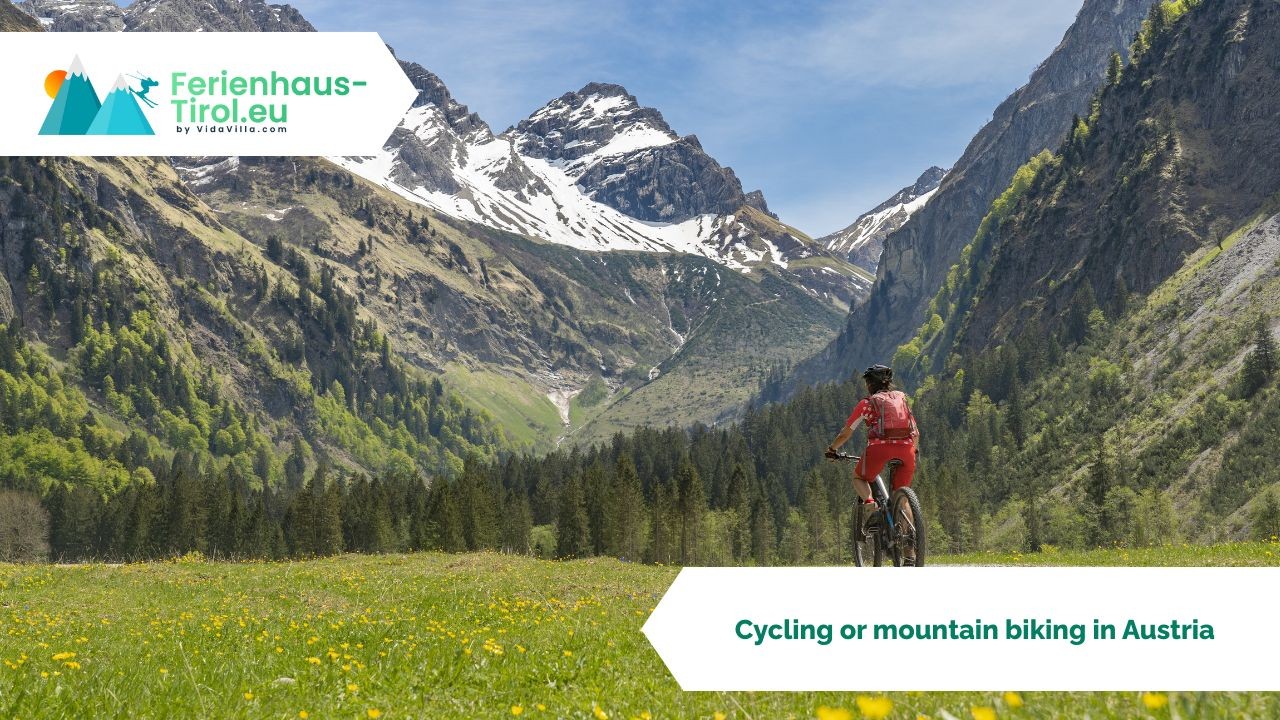
There are plenty of cycling and mountain biking options in Austria for all levels. Beginners can enjoy flat routes alongside rivers and lakes, such as the Danube Cycle Path in the Wachau region or the Drau Cycle Path in Carinthia. More experienced riders can tackle steep mountain climbs, such as the Zillertaler Höhenstraße, and challenging trails in renowned bike parks, such as Bike Republic Sölden and Saalbach-Leogang.
The best time to go is from roughly May to October. In the valleys, you can often start cycling as early as April, while high mountain passes don't become snow-free until June. In this blog post, we'll introduce you to the most popular routes and regions, and provide you with practical tips and all the information you need for a successful cycling holiday in Austria. This blog post was written by René Schwarte, founder and co-owner of Ferienhaus-Tirol.eu.
Mountain biking and a day of cycling in Austria
Whether you enjoy relaxed cycling along rivers and lakes or seek the thrill of rugged mountain trails, Austria has it all. In this blog post, we'll take you on a journey through the world of cycling and mountain biking. We'll explain which routes are ideal for beginners and families and which trails and mountain passes are perfect for experienced cyclists. This way, you'll quickly find the information that suits your level and plans.
How Austria categorises its cycling routes:
It makes a clear distinction between cycling routes (Radwege) and mountain bike trails. This is important to know because the signage and difficulty ratings work differently.
Cycling routes (Radwege):
These are well-known long-distance routes and valley cycle paths, such as the Danube Cycle Path and the Drau Cycle Path. They are usually flat or gently undulating and clearly signposted. You don't need to remember colour codes. There are often distance indicators along the way, making it easy to see where you need to go. These routes are primarily aimed at recreational cyclists, e-bike users and families.
How does Austria categorise its mountain bike trails, and why is that important?
Similar to ski slopes, Austria uses a colour-coded system for mountain biking. You'll see colour codes that indicate the level:
Green/blue: beginner level:
Easy, often wide trails or quiet roads. Fairly flat or gradual slopes. Perfect for getting into the swing of things.
Red:
Advanced Level: More challenging rides involving significant elevation gain or technical sections. Think mountain passes for road bikes and rocky, root-riddled singletrack for mountain bikes.
Black – Expert Level:
Very challenging and technical. Expect steep climbs of over 10% and downhill trails with obstacles and jumps. Only for experienced cyclists.
In well-known mountain biking regions such as the Zillertal and Saalbach, this categorisation is used consistently, and routes are often combined with lift access. This means that even less experienced cyclists can enjoy the mountain scenery: take the gondola up and descend on your bike. Colour-coded routes help you to choose the right one. Saalbach, for example, has 80 km of marked singletrack trails of various difficulty levels, as well as modern lifts to transport your bike up.
Which cycling routes in Austria are the most popular for beginners?
The country has many beautiful, flat or gently rolling routes that are ideal for beginners, families and recreational cyclists. Some of the best are:
The Danube Cycle Path (Wachau, Lower Austria)
This famous route alongside the Danube is considered one of the most popular in Europe. The section through the Wachau Valley (between Melk and Krems) is particularly popular thanks to its vineyards and castles. The path is largely flat and paved. It is perfect for day trips, with terraces and ferries along the way. You literally cycle with the flow of the river, which makes for a very relaxing ride.
Salzkammergut Lake Circuits (Wolfgangsee, Mondsee, Attersee)
In the Salzkammergut region near Salzburg, you can cycle beautiful routes around mountain lakes. These routes are often relatively flat as they stay on the banks. Expect blue waters, lush wooded hills and charming villages. For instance, you could hike from one lake to another, with plenty of opportunities to swim or have a picnic. Picturesque and peaceful, they are ideal for enjoying Alpine nature in an accessible way.
Drauradweg (Carinthia)
The Drau Cycle Route runs through the sunny south of Austria, from Italy via Carinthia to Slovenia. This route has been awarded five stars by the ADFC and is particularly suitable for families. Following the course of the Drau River, the path has virtually no inclines. You cycle from village to village, often close to the water. Carinthia is known as the sunniest region in Austria, with a climate that is almost Mediterranean. Along the route, you'll find playgrounds, beaches and swimming lakes, which are great fun for children.
See also: child-friendly ski resorts in Austria.
Ennstalradweg (Styria)
Also known as the Ennsradweg. This cycle path through the valley starts at the source of the Enns River in SalzburgerLand and winds through Styria to the Danube. The beauty of this route is that it is mainly downhill or flat as it follows the river downstream. While you're surrounded by towering mountains, including the Dachstein Massif, you'll cycle through green meadows and forests without encountering any challenging climbs. It's perfect for families and beginners who still want that Alpine feeling. Plus, there are plenty of sights along the way, such as the Gesäuse National Park, which provide plenty of opportunities to stop and explore.
Which are the most challenging mountain bike routes for advanced riders?
Are you an experienced cyclist or mountain biker looking for a real challenge? Austria won't disappoint. Here are some iconic routes and areas for die-hard cyclists:
Zillertaler Höhenstraße (Tyrol):
This legendary mountain road is located in the Zillertal. Expect a very challenging climb: from the valley, you'll ascend over 1,200 metres in elevation over approximately 15 kilometres, with gradients of over 10%. At the top, at an altitude of around 2,020 metres, you will be rewarded with stunning views of the Alps.
The Großglockner High Alpine Road (Salzburg/Carinthia):
This famous high-alpine pass road is a must-do. Winding through the Hohe Tauern National Park, it takes you up to an altitude of 2,504 metres, with the nearby Großglockner (3,798 metres, Austria's highest mountain) looming large. The entire route from Fusch to Heiligenblut is around 48 km long and includes hundreds of bends and steep gradients.
Bike Republic Sölden (Ötztal, Tyrol):
Sölden has developed into a paradise for mountain bikers, boasting an extensive trail network. The Bike Republic has something for everyone, from long flow trails meandering through alpine meadows to technical enduro routes and World Cup downhill sections. In total, there are almost 40 km of trails of varying difficulty, ranging from S0 (easy) to S5 (expert).
Saalbach-Hinterglemm/Leogang (SalzburgerLand):
This region is internationally renowned as a mountain biking hotspot and, together with Fieberbrunn, it forms the largest contiguous bike region in Austria. There are four mountains full of trails, a large bike park in Leogang and countless enduro routes. Thanks to modern lifts, you can tackle many descents in a row.
Schladming-Dachstein Bike Park (Styria):
Schladming is famous for skiing, but in summer you'll find a challenging bike park on the Planai mountain. The downhill champions who co-designed the renovated trails have created some serious descents. Steep sections, banked turns, drops and North Shore features will put your skills to the test. As well as the bike park, the region offers enduro and all-mountain trails with stunning views of the Dachstein massif.
Which regions are a paradise for cyclists and mountain bikers?
ISeveral regions in Austria are renowned for their cycling routes. Here are a few of the best and what makes them special:
Tirol
Perhaps the most diverse cycling region. In Tyrol, you'll find everything from expansive valleys with easy bike paths (such as the Inntal and Zillertal routes) to high mountains for climbing and a huge selection of mountain bike trails. With 6,000 km of MTB trails and 300 km of singletrack, Tyrol alone is a paradise for mountain bikers. Well-known valleys such as the Ötztal (home to Sölden) and the Zillertal offer a mix of recreational cycling and extreme challenges. Moreover, the infrastructure is excellent: you can rent bikes in almost every village and the routes are clearly signposted.
Salzburg
Bordering Tyrol, this state is the place to be for mountain bike trail enthusiasts. Regions such as Saalbach-Hinterglemm/Leogang and Zell am See-Kaprun attract cyclists from all over the world. There are several bike parks with lifts close together. Road bike enthusiasts will also find what they're looking for here, with challenging climbs such as the Grossglockner and the Gerlos Pass. The city of Salzburg itself is the starting point of the beautiful Tauernradweg river route. Although SalzburgerLand presents itself as the MTB capital, it also offers family-friendly options.
Carinthia
In southern Austria, bordering Italy and Slovenia, you will find the perfect destination if you love sun and relaxed cycling. It is known for its lakes, such as the Wörthersee, Faaker See and Millstätter See, and the Drau River. Here, you can enjoy flat routes such as the Drau Cycle Path, with plenty of opportunities for swimming, relaxing on terraces and canoeing alongside the cycle path. There are also climbing opportunities here, although the mountains are slightly lower than in Tyrol. This makes Carinthia ideal for families and e-bikers.
Salzkammergut (Upper Austria/Salzburg):
This region is famous for its beautiful lakes and imperial history, with popular destinations including Hallstatt and Bad Ischl. It's a dream destination for cyclists, offering relatively quiet roads with stunning panoramic views. Unlike some ski resorts, there is no mass tourism here, only idyllic villages. The Salzkammergut Cycle Path, also known as the 10-Lake Route, takes you past a series of lakes. Mountain bikers can enjoy the annual Salzkammergut Trophy marathon race, while recreational cyclists will also find numerous forest roads and gravel paths.
Styria:
This diverse region in the southeast has alpine landscapes in the north (Schladming-Dachstein) and charming, hilly countryside in the south (the wine region). Cyclists can follow the Mur Cycle Path straight through Styria or the Enns Cycle Path in the north, for example. Mountain bikers can choose from valley routes and the Schladming bike park. Styria is something of an underdog, being less well-known to the general public and therefore wonderfully peaceful on the trails. There is a great balance between experiencing nature and challenging sports.
When is the best time of year for cycling in Austria?
The cycling season generally runs from May to October. During these months, temperatures are mild and almost all routes are accessible. However, there are nuances:
Low valleys and river routes:
In the low-lying areas (such as the Danube region, Carinthia and the Inn Valley), cycling is often excellent from April onwards. Temperatures are around 15–20 °C and the blossom is in bloom, providing wonderful spring weather. April can still be changeable, but May is often ideal, with fresh green landscapes and quiet trails. October is also often pleasant in the valleys, where you can enjoy the autumn colours and fresh air, although the days are getting shorter.
High alpine routes and mountain passes:
For true mountain roads such as the Grossglockner, Timmelsjoch and Silvretta Pass, the summer season is the only option. Many of these passes only open at the end of May or in June once the snow has been cleared. The best months for high-altitude tours are July, August and early September. Bear in mind that it can be much colder at high altitudes, and there may still be snow at the roadside even in the middle of summer. High-alpine roads often close again in October with the first snowfall.
Summer weather:
June, July and August generally offer warm days (25–30 °C in the valleys). This is perfect cycling weather, but the Alps can be unpredictable. Thunderstorms can occur in the afternoon due to the heat. Therefore, the mountain rule applies: start early in the day. Plan your challenging climb for the morning, so that you reach the top around lunchtime and can descend before any thunderstorms arrive. Always bring a rain jacket, even if it's a clear blue sky in the morning – the weather can change quickly in the mountains.
You can find more basic tips in our 'Austria for Beginners' guide.
Seasonal border advantage:
September is considered by many to be the best time: the summer holidays are over, so it's quieter on popular routes; the temperatures are slightly milder and more stable; and the natural beauty is in full bloom. Alternatively, in May and June, you can enjoy the stunning spring greenery and flowering mountain pastures. Try to avoid the crowds in popular tourist areas in July and August, or set off early.
In short, cycling in Austria is fantastic from spring to autumn. Avoid winter and plan high-mountain tours for the true summer months to be on the safe side. Always check local conditions just before your trip.
How good are the facilities for cyclists and mountain bikers?
One of the great things about Austria is that it caters for tourists with excellent facilities. Cyclists will immediately notice this.
Bike rental:
In all major tourist regions, it is easy to rent bikes. Whether you want a road bike, an e-bike or a downhill mountain bike, there are plenty of sports shops and rental centres. In popular destinations such as Sölden, Zell am See, Innsbruck and Villach, high-quality rental bikes are widely available. You can often even rent a bike directly from the train station or your hotel. Many rental companies conveniently offer route suggestions and provide helmets if you don't have one.
Lifts and transport:
In the major mountain biking areas, lift assistance is standard. This means that ski lifts and gondolas are open to cyclists in the summer. You can often easily take your mountain bike with you, as some gondolas are specially designed to allow bikes to be loaded on and off. In Saalbach, for example, six or more gondolas are open to transport bikers, and in Serfaus-Fiss-Ladis they even have special bike clamps in the cabin. You can often purchase a Bike Ticket for unlimited use of the lifts per day.
Signage:
Austria has been investing in excellent cycle route signage for years. Well-known long-distance routes such as the Danube Cycle Path, the Drau Cycle Path and the Tauern Cycle Path have uniform signs everywhere. Mountain bike routes are similar: in Tyrol, for example, they are numbered and colour-coded. At trailheads, you will often see a sign displaying the route name, colour and, if it is a difficult section, warning pictograms. It's still wise to carry a map or app (Komoot, Bikemap, etc.) just in case, but it's generally difficult to get lost on Austrian cycle paths.
Other amenities:
Consider bike-friendly accommodation with lockable parking and a repair kit, transporting your bike by train (many regional trains have bike carriages in the summer) and even having your luggage transported along the most popular cycle routes. Bett+Bike accommodation providers know exactly what cyclists need, offering amenities such as charging stations, laundry services and early breakfasts. Along popular routes, you will regularly find bike repair shops in case of breakdowns, as well as tourist information offices offering free route maps. In short, the facilities are excellent, allowing you to enjoy carefree cycling.
Is it a good idea to cycle with an e-bike in Austria?
Yes, absolutely! E-bikes have truly taken the Alps by storm in recent years, which is great news for holidaymakers. They provide pedal assistance, making hills and mountains much more accessible. If you're renting an e-bike, choose a reputable company and plan your rides carefully. The battery drains faster in the mountains, particularly when riding uphill in the highest gear. Many routes have charging stations at mountain restaurants or lifts, so be sure to ask about them. Overall, e-biking is a godsend in Austria. You'll see more of the country with less effort.
Conclusion
In short, Austria is a cycling paradise for all. Whether you're an experienced mountain biker seeking the most challenging trails or a novice looking for a more leisurely ride, you'll find a route to suit your needs. The country boasts breathtaking scenery and cycling-friendly infrastructure. But why is that important? Because so many Dutch people miss out on opportunities due to a fear of it being "too difficult". It doesn't have to be that way. We hope that, with the tips and information in this blog, you'll be able to plan your cycling holiday to Austria with confidence.
Holiday homes Austria: a selection
Your holiday to Austria
My name is René Schwarte, founder and co-owner of Ferienhaus-Tirol.eu. With many years of experience in holiday home rentals and deep familiarity with international guest expectations, I understand what makes a vacation truly enjoyable.
Ferienhaus-Tirol.eu offers a wide selection of carefully curated holiday homes, chalets and group accommodations throughout Austria. Whether you're travelling as a couple or with a group of up to 50 people – we help you find the right place with ease.
Our website is available in English, German and Dutch. We speak your language and are happy to assist you with any questions or special requests.
Need help?
Feel free to get in touch – we're here to make your Austrian holiday unforgettable.
Phone: +31854016545 Mail: info@Ferienhaus-Tirol.eu

René Schwarte
Co-OWNER
