Can You Feel the Difference Between Natural Snow and Artificial Snow?
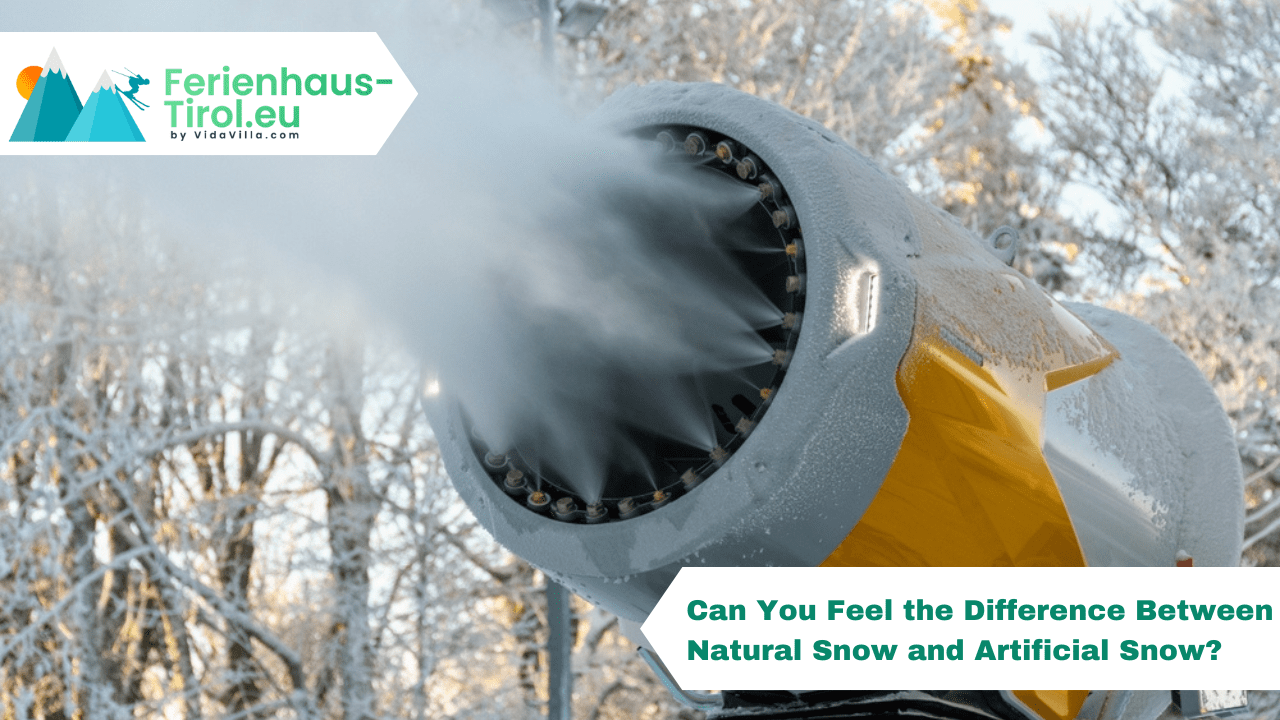
Many skiers wonder whether you can really feel the difference between natural snow and artificial snow. This guide explains what you notice on the slopes — and when.
This blog was written by René Schwarte, founder of Ferienhaus Tirol.
Artificial snow has become a standard part of almost every ski resort in Austria. Especially in warmer winters, it’s essential for reliable slopes. But when you’re skiing, you may wonder: can you actually feel whether you’re on natural snow or artificial snow?
The short answer: yes, sometimes — but not always. It depends on temperature, time of day, slope preparation, and your own experience. Here’s how it really works.
What’s the actual difference between the two types of snow?
Natural snow: soft and airy
Natural snow forms when water vapour freezes into complex snow crystals. These crystals contain lots of air, making the snow:
- softer
- smoother
- comfortable to ski on, especially for beginners
On cold days, natural snow stays pleasantly light and grippy.
Artificial snow: compact and granular
Artificial snow is produced when water is sprayed under high pressure and the droplets freeze instantly. This snow is:
- denser
- harder
- more durable
- perfect as a stable base layer
This makes it ideal for preparing strong, consistent pistes.
Do you feel the difference while skiing?
Often yes — but not everywhere and not all day long.
1. Hardness and grip
Artificial snow
- feels harder, especially in the morning
- offers strong grip
- is great for confident, faster skiers
Natural snow
- feels softer and more forgiving
- makes turning easier
- is ideal for beginners
2. Changing conditions throughout the day
Morning
Artificial snow tends to form hard, fast pistes.
Natural snow usually stays a bit softer.
Midday
Artificial snow holds up better under heavy traffic.
Natural snow breaks up more quickly.
Late afternoon
Artificial snow can develop piles of soft, granular snow.
Natural snow may become slushy when temperatures rise.
3. Valley runs: the place where you notice it most
Lower slopes rely heavily on artificial snow, so you’re more likely to notice the difference here than at higher altitudes.
Why do ski resorts use so much artificial snow?
Quite simply: reliability.
Snowmaking allows ski resorts to:
- open slopes earlier
- keep them open longer
- maintain valley runs
- create strong base layers under natural snow
For you, this means: more snow reliability.
Which is more enjoyable: natural snow or artificial snow?
Whether natural snow or artificial snow feels better to ski on depends on your skiing style, experience level and personal preferences. If you're an advanced or confident skier who enjoys firm, hard-packed slopes and likes to pick up some speed, artificial snow often feels stable and comfortable.
Prefer softer, smoother pistes, are you still learning, or do you love off-piste terrain and powder? Then natural snow will usually suit you much better. Each type of snow has its own character — and it’s up to you to choose which one fits your skiing style best.
How can you tell which snow you're skiing on?
- Hard, glossy surface → often artificial base
- Soft, powdery feel → usually natural snow
- Afternoon piles of granular snow → typically artificial snow
- Snow cannons nearby → high chance of artificial snow in that area
But on well-prepared pistes, many skiers barely notice the difference.
Conclusion: can you feel it?
Yes — but it depends heavily on conditions.
Artificial snow is firmer and grippier.
Natural snow is softer and more comfortable.
Together, they create reliable, enjoyable skiing conditions throughout the winter season.
My name is René Schwarte, founder and co-owner of Ferienhaus-Tirol.eu. With many years of experience in holiday home rentals and deep familiarity with international guest expectations, I understand what makes a vacation truly enjoyable.
Ferienhaus-Tirol.eu offers a wide selection of carefully curated holiday homes, chalets and group accommodations throughout Austria. Whether you're travelling as a couple or with a group of up to 50 people – we help you find the right place with ease.
Our website is available in English, German and Dutch. We speak your language and are happy to assist you with any questions or special requests.
Need help?
Feel free to get in touch – we're here to make your Austrian holiday unforgettable.
Phone: +31854016545 Mail: info@Ferienhaus-Tirol.eu

René Schwarte
Co-OWNER
