What is the snow reliability in Austria (per winter month)?
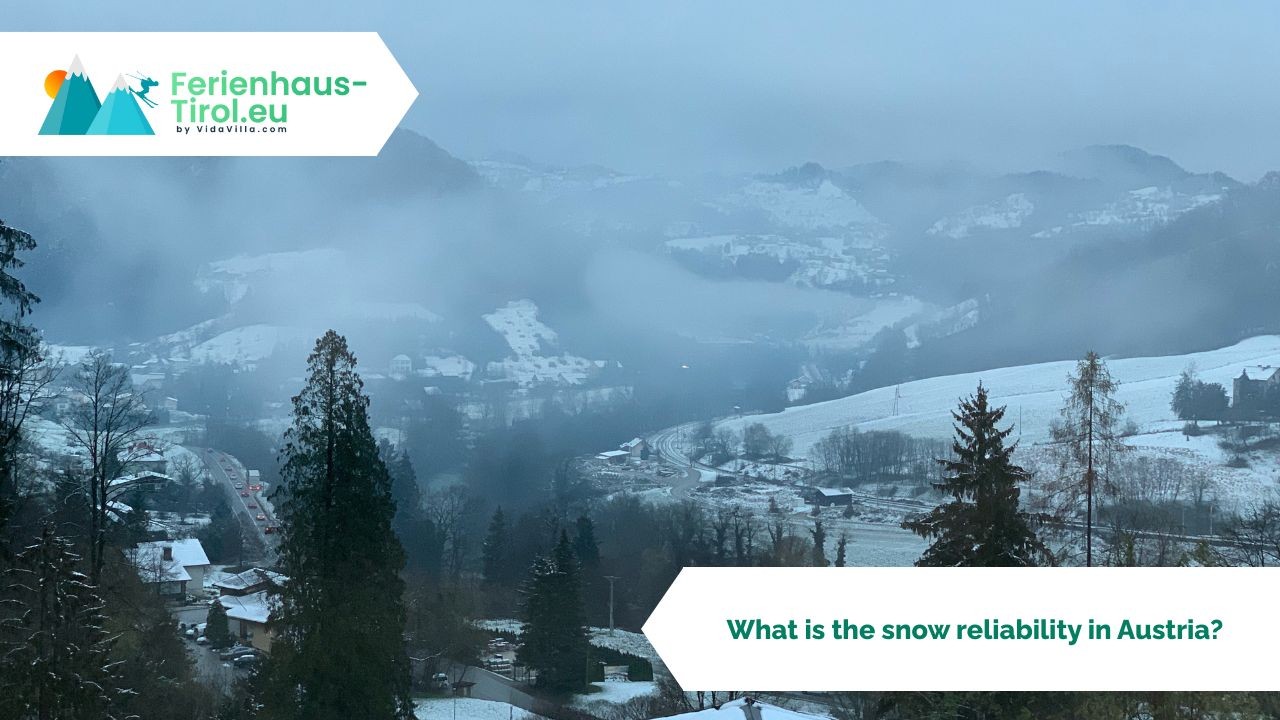
You've set your sights on a wonderful winter sports holiday in Austria. You've found a beautiful, affordable apartment, but then you start to have doubts: will there actually be snow during that period? Is that area snow-sure enough?
This can make all the difference between a fantastic holiday and a disappointment, especially in lower-lying villages. Every year, we help dozens of winter sports enthusiasts to find the right apartment in the right location, and we know exactly which months and areas can truly be relied upon for snow.
This blog was written by René Schwarte, co-owner and founder of Ferienhaus Tirol. After reading it, you'll know exactly which Austrian regions you can count on for snow in which months. This will help you to book your winter sports accommodation with greater confidence.
But why is guaranteed snow important for your winter sports holiday?
Guaranteed snow is one of the most important factors when booking a winter sports holiday in Austria. Now that winters are becoming milder and the snow line is fluctuating more frequently, no one wants to spend their hard-earned holiday on a lush mountain slope or be completely dependent on artificial snow.
Understanding how snow reliability varies by month and region will help you avoid disappointment and make a smarter choice when booking your accommodation. With the right timing and location, you can enjoy a more carefree trip, safe in the knowledge that your skis won't go unused.
Which factors determine the reliability of snow per month?
Snow reliability in Austria depends on several factors. Altitude is perhaps the most important factor: the higher the ski resort, the colder it is and the greater the chance of snow. The time of year you travel also makes a difference: the winter sports season runs from December to March or April, but there are significant variations within that period.
In addition, location is important: western and northern Alpine regions (such as Tyrol and Vorarlberg) often receive more precipitation, while areas further south or at lower altitudes may receive less snow. Finally, there are glacier regions where you can ski almost year-round thanks to permanent ice caps.
Why do winter sports enthusiasts underestimate snow reliability?
Many overestimate snow reliability in early and late winter (December and March) and underestimate how snowy January and February typically are, even in lower-lying resorts.
Statistics confirm this: Historically, January is the month with the most snowfall in Austrian ski resorts, closely followed by February. These core winter months have the lowest temperatures and the most consistent snowfall.
While December can certainly bring plenty of snow, especially in the second half of the month, the first half is still a bit of a wait-and-see situation. March often offers excellent conditions on higher slopes, with the added benefits of longer days and more frequent sunshine.
Which months offer the best chance of snow in Austria?
January and February are generally considered to be the months with the most snow. On average, January sees the most fresh snow, and the base layer on the slopes has significantly thickened by then. Temperatures are well below freezing, which prevents the snow from melting and maintains optimal conditions. In many ski resorts, there is more than enough snow in January to open all the slopes.
Snow Guarantee in February
February is just as good as January. The snowpack is often even thicker in February, and the quality remains high thanks to the cold nights and frequent sunny days that keep the snow dry and powdery. It's no wonder these two months are popular with seasoned skiers looking for reliable powder.
Snow Guarantee in March
Although mainly for high-altitude resorts, March is also considered a snow-sure period. Thanks to the snowfall in December, January and February, most ski resorts have built up a substantial snow base by early March.
In higher-altitude ski areas (above approximately 1,500 metres), the snow remains in good condition throughout the month, making March an attractive time to visit: you'll enjoy long days and mild winter sunshine, while there's still plenty of snow.
However, be aware that in lower valleys or on south-facing slopes, the snow can become a bit mushy in the afternoons due to higher temperatures. Generally speaking, however, March is a very reliable month for snow, especially at altitude, making it ideal for a slightly calmer and sunnier skiing experience.
Snow guarantee in December
December is an unpredictable month in terms of snowfall. The ski season officially begins in December, with many ski resorts opening their lifts early in the month. By Christmas, there is usually enough snow for skiing in higher-elevation areas.
Consider resorts with a reliable snow record, such as Obertauern, Ischgl and Sölden, or the glaciers (e.g. Hintertux, Stubai and Kitzsteinhorn near Kaprun). Thanks to their altitude and/or glaciers, you can often ski in these areas from November or early December.
However, lower-elevation areas are somewhat uncertain in December: if natural snowfall is late, these villages have to rely on snow cannons to provide white slopes at Christmas. Many ski resorts invest heavily in artificial snow and can start covering the slopes as early as late November on cold nights, meaning the main slopes are often artificially white by mid-December. The later in December you go, though, the greater the chance of sufficient natural snow. The second half of December is generally much more reliable than the first half for a snowy holiday.
Are there significant differences between regions in terms of snow reliability?
Yes, snow reliability varies considerably from region to region in Austria. Roughly speaking:
Tirol and Voralberg
The Tyrol and Vorarlberg regions of western Austria have many high-altitude ski resorts and are considered very reliable for snow. Due to their location on the main Alpine ridge facing northwest, these regions receive a lot of snow. In these regions, there is often sufficient snow for skiing from December to April. The high peaks of Tyrol benefit from northerly winds, which often result in heavy snowfall. The Zugspitz Arena in Tyrol is a good example of this, as the presence of the Zugspitze glacier means you can ski there from November to May.
Salzburg
Salzburgerland offers a mix of high- and low-altitude ski resorts. The higher areas of Salzburg (around Kaprun/Zell am See or Obertauern, for example) receive snow from multiple directions and are fairly snow-sure. The lower-lying parts of Salzburg, however, are more dependent on the amount of snowfall in a given year. Generally speaking, you can rely on good snow cover in Salzburgerland in January and February, whereas the amount of snow in December and March depends on the altitude of the area.
Carinthia
The regions of Carinthia and Styria are located further south and have many ski resorts at lower altitudes. As these regions often experience less natural snow, they are more dependent on artificial snow and good snow preparation. However, this doesn't mean that you can't ski there; many of the ski resorts in Carinthia and Styria have excellent snow cannons. For a snow-sure holiday in December, for example, it's better to choose one of the higher ski resorts or glaciers (such as the Mölltal Glacier in Carinthia).
January and February also offer the best chance of sufficient snow, but in warmer winters, the snow line in these southern provinces can be somewhat higher than in Tyrol or Salzburgerland.
In short, consider not only Austria as a whole, but also the specific region and the altitude of your intended destination. A village at an altitude of 800 metres in Styria, for example, has very different snow reliability to one at an altitude of 1,400 metres in Tyrol. So be sure to research the area you're interested in; many regions publish their own snow history and statistics, so you can see what the conditions have been like in recent years.
Where can winter sports enthusiasts find reliable and up-to-date snow information?
Once you've booked your trip, or if you're still undecided, you'll naturally want to keep an eye on the current situation. Reliable snow information is essential. The ski resort's own website is often the best place to start.
Almost every ski resort in Austria publishes a daily snow report on its website with information about snow depth in the valley and on the mountain, which lifts are open and when it last snowed.
There are also useful independent platforms. Bergfex is a popular website and app where you can see the current snow depths and weather forecast for each region and ski resort.
Skiresort also offers detailed snow information for each resort, as well as live webcam images and reviews.
The advantage of these platforms is that you can compare multiple ski resorts and they often also show historical data. Our tip: start checking the long-term weather forecast about two weeks before you leave. Forecasts are most reliable in the last few days before your trip.
What are your options if there isn't much snow in a lower-lying area?
What if you've chosen a lower-lying ski resort and the winter is unusually mild? What can you do if there's little snow in your valley? Fortunately, there are still ways to enjoy a successful winter sports holiday:
One option is to visit higher-lying ski areas.
Many Austrian ski regions offer access to multiple ski areas with a single ski pass. If the slopes in your valley are green, you can often take the car or ski bus to a neighbouring area that's higher up or has a glacier. This way, you can still find snow.
Other winter activities:
Winter sports are more than just skiing. If the conditions are poor, you can plan a day of winter hiking or snowshoeing in the beautiful surroundings (provided there's snow or frost higher up). Or you could go tobogganing on a toboggan run. There are also often wellness facilities (saunas and thermal baths) in the region where you can relax. And don't forget the charm of the Alpine towns. True avid skiers will always try to find snow. If necessary, they'll drive an extra hour in the morning just to reach a high, snow-covered slope. If you're one of those people, make sure you have access to a car or local ski bus so you can travel flexibly to another area. Check with the local tourist office or lift company, as they often know exactly where there's still snow in the region.
Tips for guaranteed snow in Austria
Consider the altitude of the ski area:
Choose a destination with a high-altitude base station (above ~1,200 metres) and slopes reaching up to or above 2,000 metres. The higher the altitude, the colder it is and the longer the snow lasts.
Go during the main winter months:
If guaranteed snow is your top priority, plan your holiday for the second half of January or February. During this period, the snow conditions are usually the best and almost all the slopes are open.
Choose an area with multiple ski resorts:
Some valleys offer access to several ski areas (e.g. Ski Amadé, Olympia SkiWorld Innsbruck and Zillertal). Booking in such a region provides a backup plan and allows you to easily switch to a higher area if necessary.
Check the snow history:
On websites such as Bergfex, you can often find graphs showing the average monthly snow depth for each ski resort. Use this information to inform your choice. Resorts that have only properly opened in January for the past five years are likely to have less snow certainty in December.
Be careful with Christmas in low-lying villages:
While the Christmas atmosphere in a low-lying village can be fantastic, the slopes there aren't always fully open at the end of December. Unless you're willing to drive long distances every day, it's better to choose a high-altitude resort with guaranteed snow for the holidays.
Consider a glacier resort for early or late holidays:
If you're going skiing at the beginning of the season (November or early December) or at the end (late March or April), look for a resort with a glacier or an area known for its high snow certainty. The higher price or extra travel distance will be worth it for the almost guaranteed snow.
Conclusion
Snow reliability in Austria varies considerably by month and by region. January and February are by far the most reliable months for deep snow.
December and March can also offer fantastic skiing, provided you choose the right high resorts and are lucky with the weather. It is crucial to consider snow reliability when booking a winter sports holiday, as this can make or break your trip. Armed with the insights from this blog, you can book with greater confidence and assurance.
Holiday homes Austria: a selection
Your holiday to Austria
My name is René Schwarte, founder and co-owner of Ferienhaus-Tirol.eu. With many years of experience in holiday home rentals and deep familiarity with international guest expectations, I understand what makes a vacation truly enjoyable.
Ferienhaus-Tirol.eu offers a wide selection of carefully curated holiday homes, chalets and group accommodations throughout Austria. Whether you're travelling as a couple or with a group of up to 50 people – we help you find the right place with ease.
Our website is available in English, German and Dutch. We speak your language and are happy to assist you with any questions or special requests.
Need help?
Feel free to get in touch – we're here to make your Austrian holiday unforgettable.
Phone: +31854016545 Mail: info@Ferienhaus-Tirol.eu

René Schwarte
Co-OWNER
