What are the cheapest ski resorts in Austria?
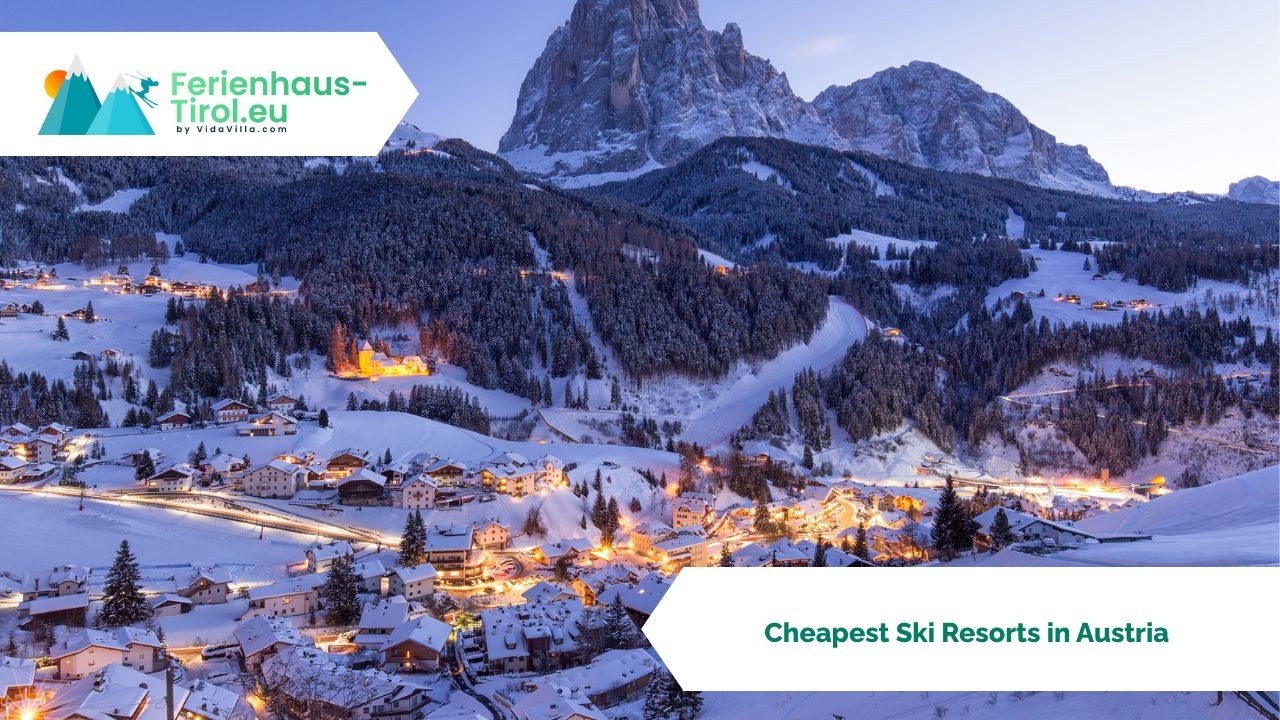
Winter sports are fantastic, but they can be expensive. However, there are plenty of ski resorts in Austria where you can ski at a reasonable price. And no, these aren't small, unknown areas. Popular resorts such as Silvretta Montafon, Wildkogel Arena, Gasteinertal and Zillertal Arena are also known for being affordable.
This blog post was written by René Schwarte, co-owner and founder of Ferienhaus Tirol. Read on to find out which well-known ski resorts are relatively affordable, what causes those lower costs, and how you can save money without sacrificing your enjoyment of the sport.
Why are more and more people looking for affordable winter sports?
Rising costs make it difficult for families and groups of friends, but more and more people are looking for winter sports. Ski passes can cost hundreds of euros, slopeside hotels are expensive, and food and drink on the slopes are becoming increasingly costly. Has winter sports lost its appeal for those on a budget? We don't think so.
Austria offers a surprising number of destinations where you can enjoy a complete ski holiday at a relatively low price. The key is to choose wisely: which region, which village and which accommodation offers the best value for money? Our vision is that cheap doesn't have to mean boring or poor quality. Affordable skiing is about balance. By carefully considering factors such as ski pass prices, location and accommodation, you can save significantly without compromising on enjoyment.
Winter sports offer a complete experience, and you can often save more than you think within that total package. Below, we answer the most important questions to consider when looking for an affordable ski holiday.
Which well-known Austrian ski resorts are affordable?
Of the popular resorts, a few stand out as relatively affordable. Our top four in Austria are: Silvretta Montafon, Wildkogel Arena, Gasteinertal (Ski Gastein) and Zillertal Arena. These resorts offer good slopes and facilities at lower cost.
Please note that the prices below are only indicative – always check the original websites for current prices.
Silvretta Montafon (Vorarlberg)
With 140 kilometres of slopes, Silvretta Montafon is one of the largest resorts in Vorarlberg. You'll find fast, modern lifts and challenging runs here without paying a premium. A six-day ski pass costs around €320, which is well below the Austrian average. It's perfect for those who want plenty of skiing at a reasonable price.
Wildkogel Arena (Salzburgerland)
This welcoming ski area has around 75 km of slopes and guaranteed snow conditions up to an altitude of 2,100 metres. The relaxed atmosphere is ideal for families and beginners. A six-day ski pass costs around €331.
As an added bonus, you can enjoy the world's longest floodlit toboggan run, which is an impressive 14 km long! It's a hit with children and adults alike!
Gasteinertal (Salzburgerland)
Consisting of four ski areas, Gasteinertal offers a total of 177 km of slopes and the opportunity to ski up to an altitude of 2,686 metres.
Although the ski pass is slightly more expensive at around €395, this is offset by the affordable accommodation. In villages such as Dorfgastein, for example, you can book a one-week stay in a two-person apartment for around €1,250.
Zillertal Arena (Tirol/Salzburgerland)
With 143 km of slopes and connections between villages such as Zell, Gerlos and Königsleiten, the Zillertal Arena offers endless possibilities. The lifts are modern, the runs are varied, and the six-day ski pass costs around €369. The price-quality ratio here is remarkably good, especially if you plan to spend every day on the slopes.
How much can you save at an affordable ski resort in Austria?
The savings can be significant. Just looking at the ski pass, the difference between an expensive and a cheap resort can be as much as €50–€100 per person per week.
For example, a six-day ski pass in a popular but expensive area such as Kaprun costs around €405, whereas in Silvretta Montafon it costs around €320. That's a saving of around €85 per person on the ski pass alone. Accommodation often carries even more weight. In very popular villages, you'll pay a high price for a hotel or chalet.
However, if you stay just outside the town centre or in a neighbouring village, you could save hundreds of euros. For instance, a basic apartment for two people in the affordable Gastein Valley costs an average of €1,250 per week, whereas a comparable stay in the busier Zillertal Arena would cost around €1,660. So, you could save up to €400 on your stay.
In short, by choosing your destination and accommodation wisely, you can save hundreds, or even thousands, of euros on a winter sports holiday.
Are the lesser-known ski resorts in Austria worth considering?
If you're on a budget, it's definitely worth exploring places that are off the beaten track. Austria has dozens of smaller, lesser-known ski resorts that are incredibly enjoyable, particularly for beginners and families. Ski pass prices are often much lower there.
In some mini-resorts, a six-day pass costs just €100–€180, compared to €300–€400 in larger resorts. That's a significant saving. Naturally, these areas are smaller and less crowded.
They usually have a friendly atmosphere and are therefore ideal for skiing in peace. For those who don't require extensive après-ski facilities or a new ski run every day, lesser-known resorts are definitely worth considering.
Please note that such a small area can feel limiting for serious long-distance skiers or very advanced skiers. However, you can combine options: for example, you could rent an affordable apartment in a quiet area and take day trips to a larger ski resort from there.
What about your location and the price of your winter sports holiday?
Accommodation is often the largest expense in the total cost of a ski holiday. That's why it pays to research this carefully. A hotel right on the slopes is fantastic, but you pay for it. By choosing a guesthouse or apartment a little further from the slopes — for example, in a nearby village — you can save considerably.
You can often reach the lift in 10 minutes by car or free ski bus, so the loss of convenience is minimal. Of course, remember that travel time and room type also make a difference. A luxury hotel room during peak season will be more expensive than a basic apartment outside the school holidays.
As a rule of thumb, however, a slightly more expensive ski pass in a budget-friendly village is usually cheaper than a cheap pass in an expensive resort where the accommodation is unaffordable. Ideally, you should try to combine both: a ski area with reasonable prices for ski passes and affordable accommodation nearby.
How can you compare the prices of ski passes and accommodation in Austria?
The best way is to compare them directly at the source. For ski passes, visit the official websites of the relevant ski resorts. There, you will find the current prices, which are often categorised by season and age group. An increasing number of resorts are using dynamic pricing systems, so if you buy your ski pass online well in advance, you'll receive a discount.
When it comes to accommodation, it's best to consult multiple sources. Our website and other booking platforms offer filters for price comparison. You may also wish to consider packages that include a ski pass. Some tour operators offer packages including a week's stay and a ski pass at a combined price. This can be more cost-effective than booking everything separately.
Finally, read reviews and pay attention to the location. A seemingly good deal that turns out to be far from the slopes without a ski bus can end up costing you more if you have to commute every day. Fortunately, most booking sites clearly indicate how far the accommodation is from the lift and whether there's a ski bus nearby.
Which choices have the biggest impact on price?
The location of your accommodation:
A hotel on the slopes is very convenient but expensive. An apartment outside the town centre or in a nearby village is often much cheaper. For example, staying in Mittersill (near Kitzbühel) or Ried (near Kaltenbach in the Zillertal Valley) is usually considerably more affordable than staying in the centre of a popular ski village. Thanks to ski buses or a short drive, you can still be on the slopes in no time.
Large, popular ski resort vs. smaller, lesser-known area:
The big names (Ischgl, Sölden and Kitzbühel) offer plenty, but you pay a premium. Smaller resorts are quieter and more intimate, and often 30–40% cheaper in terms of ski passes and food. So consider how many kilometres of slopes you really need. A smaller area might be just as enjoyable and save you a lot of money.
Travel method: self-drive vs organised transportation:
Driving by car can save you money, especially if you're travelling with several people and sharing fuel costs. You can also avoid local transfer costs and bring groceries. However, a flight or train journey with a transfer is usually faster and more comfortable, but more expensive (especially during peak season). Four people in one car is often cheaper than four separate flights and transfers. However, don't forget to factor in fuel, tolls and parking costs.
How can you save money on winter sports? Here are five practical tips:
Book early or at the last minute:
Many organisations and rental companies offer discounts for early bookings, so if you book your winter holiday in the summer, you might get a discount. You might get a 10% discount or extras such as free equipment rental. Alternatively, you can save money with a last-minute deal just before you leave, particularly outside school holidays. However, your options may be more limited. If you're tied to the school holidays, it's usually wiser to book early.
Compare ski pass prices and buy online:
Check prices for different areas. Sometimes there are significant differences between regions. In addition, an increasing number of ski resorts are offering discounted tickets online. Another useful tip is to consider regional passes; the Salzburger Super Ski Card and the Tirol SnowCard, for example, cover dozens of areas. These are only cost-effective if you plan to ski a lot, but they can be worthwhile for enthusiasts.
Choose accommodation just outside the city centre:
As we've already mentioned, this is the ultimate savings tip. An apartment in a village five kilometres away could cost half the price of a comparable property right next to the lift. Although you won't be in the heart of the action, you can still enjoy the same ski area for a much lower price.
Plan a rest day or some alternative activities:
Skiing every day is expensive (lift pass, equipment hire, lunch on the mountain). Consider doing something different one day during your week. You could go tobogganing (which is cheaper than skiing), take a winter hike, visit a water park or thermal baths, or explore a nearby town. This variety will save you money and give your body a rest, while still allowing you to enjoy the snowy surroundings.
Take advantage of discount passes and family deals:
Many regions have discount cards. Ski resorts often offer family discounts too, such as free travel for children up to a certain age or special family prices. If you're travelling with children, it's worth finding out which slopes they can ride on for free or at a discount. There are also promotions for adults, such as Ladies' Day or discounted passes for those aged 60 and over. So do your research — those discounts can make a big difference!
Conclusion
We hope these tips and examples will help you see that winter sports in Austria don't have to be prohibitively expensive. Affordable skiing in Austria is truly possible if you know what to look for. By carefully choosing your ski area, ski pass, and accommodation, you can save hundreds of euros without sacrificing your enjoyment.
This is important, because why pay more than necessary when there are wonderful alternatives? Winter sports are an investment, but with the right knowledge, you'll get the most out of them in the form of snow fun and wonderful memories. And remember: we're happy to help you with our experience, network, and love for the Alps. So you can soon enjoy your well-deserved winter sports holiday worry-free and affordably!
Holiday homes Austria: a selection
Your holiday to Austria
My name is René Schwarte, founder and co-owner of Ferienhaus-Tirol.eu. With many years of experience in holiday home rentals and deep familiarity with international guest expectations, I understand what makes a vacation truly enjoyable.
Ferienhaus-Tirol.eu offers a wide selection of carefully curated holiday homes, chalets and group accommodations throughout Austria. Whether you're travelling as a couple or with a group of up to 50 people – we help you find the right place with ease.
Our website is available in English, German and Dutch. We speak your language and are happy to assist you with any questions or special requests.
Need help?
Feel free to get in touch – we're here to make your Austrian holiday unforgettable.
Phone: +31854016545 Mail: info@Ferienhaus-Tirol.eu

René Schwarte
Co-OWNER
