How Does Climate Change Affect Snow Reliability in Austria?
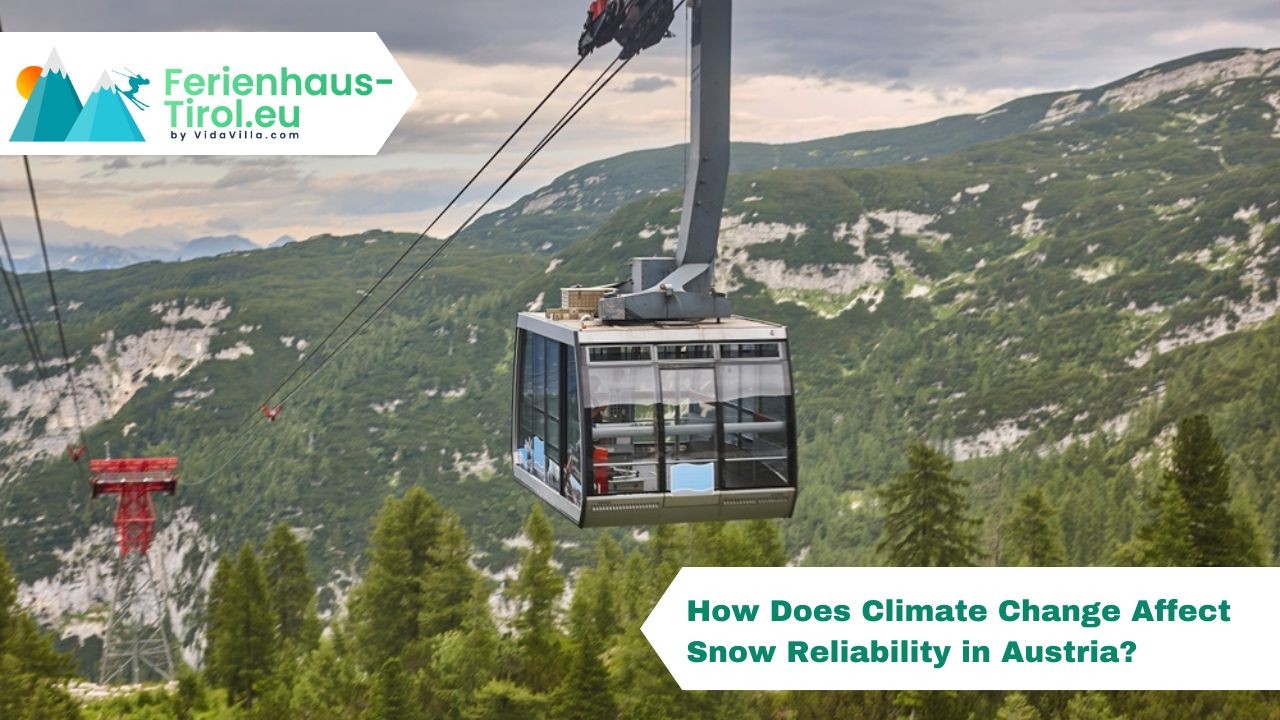
Climate change is reshaping winter conditions in Austria, with snow reliability decreasing in many lower ski areas. Rising temperatures and a higher snow line reduce natural snowfall below 1,500 metres, while high-altitude regions and glacier resorts remain the most dependable choices for winter sports.
Climate change is having a visible impact on Austria’s ski regions. Rising temperatures and shifting precipitation patterns make snowfall increasingly unpredictable, especially at lower elevations. The Alps are now warming twice as fast as the global average, which directly affects snow reliability.
Rising temperatures and an increasing snow line
According to Geosphere Austria, the snow line is rising by 150 to 300 metres on average. Areas below 1,200–1,500 metres are seeing more rain instead of snow.
Ski areas situated above 1,800–2,000 metres remain much more snow-reliable thanks to consistently lower temperatures.
Those who choose to go on a winter sports holiday in Austria would therefore be wise to consider higher altitude regions.
Read more about snow reliability in our blog ‘What is the snow reliability in Austria (per winter month)?’
Increasing dependence on artificial snow
Because natural snowfall arrives later and melts faster, many ski resorts have invested in modern snowmaking systems. Artificial snow has become essential for securing early-season openings and maintaining skiable conditions — though it requires significant energy and water.
Regional differences
De invloed van klimaatverandering varieert sterk per Oostenrijkse regio:
- Tyrol, Vorarlberg and glacier regions such as Sölden, Stubaier Glacier and Pitztal remain the most reliable.
- Salzburgerland and Zillertal perform well at higher elevations but see more rain in the valleys.
- Styria and Carinthia face more unstable winters and rely heavily on artificial snow.
Impact on skiers and tourism
Climate change is also reshaping travel behaviour. Skiers increasingly book later—often only after checking live snow reports—because early-season conditions have become less predictable.
Lower ski areas face shorter and more variable seasons and must adapt with flexible opening dates and a wider range of snow-independent activities such as wellness, winter hiking or culinary experiences.
This shift also affects local businesses, as demand concentrates more strongly in high-altitude and glacier resorts. Regions below 1,500 metres may experience significantly shorter operational windows in the coming decades.
Tips for your ski holiday
-
Choose high-altitude or glacier ski areas for maximum snow reliability.
-
Monitor weather and snow reports ahead of your trip.
-
Enjoy alternative activities such as winter hiking, wellness or alpine culinary experiences.
Future outlook
Despite the effects of climate change, Austria remains one of Europe’s most reliable winter destinations. With high mountains, modern infrastructure and glacier resorts, you can continue to enjoy dependable skiing conditions in the coming years.
FAQ – Climate Change & Snow Reliability
How does climate change affect snow reliability in Austria?
Rising temperatures reduce the amount and frequency of natural snowfall, especially below 1,200–1,500 metres. The Alps are warming twice as fast as the global average, resulting in shorter and more unpredictable winters.
Are lower-altitude ski areas becoming noticeably less snow-reliable?
Yes. According to Geosphere Austria, the snow line is rising by 150–300 metres on average. This means lower ski areas experience more rain, more thaw periods and increasingly shorter ski seasons.
How snow-reliable are glacier ski areas for the future?
Glacier regions remain the most reliable due to their elevation (> 2,500 m). Although summer melt and long-term retreat affect glaciers, they currently offer the most stable winter conditions for skiing.
By how much is the snow line rising due to climate change?
Geosphere Austria reports an average rise of 150 to 300 metres, depending on winter patterns and region. As a result, the threshold for reliable snow is shifting upwards toward 1,800–2,000 metres.
Sources & References
The information in this article is based on reliable and up-to-date data from official and scientific organisations specialising in climate, weather and winter sports in Austria.
- Geosphere Austria — Austria’s national service for meteorology and geosciences, providing data on temperature, precipitation, snow depth and climate trends.
- Geosphere Austria – Effects of Climate Change on Winter and Mountain Sports — Expert article explaining how climate change affects snow reliability, winter seasons and alpine conditions.
- Climate Change Centre Austria (CCCA) — Research body and publisher of the Austrian Climate Change Assessment Report (AAR22), offering extensive analyses on climate trends in the Alps.
- CCCA – Climate Change Puts Winter Sports Events at Risk — Article discussing how climate change threatens winter events, snow reliability and the future of alpine winters.
Last source review:
My name is René Schwarte, founder and co-owner of Ferienhaus-Tirol.eu. With many years of experience in holiday home rentals and deep familiarity with international guest expectations, I understand what makes a vacation truly enjoyable.
Ferienhaus-Tirol.eu offers a wide selection of carefully curated holiday homes, chalets and group accommodations throughout Austria. Whether you're travelling as a couple or with a group of up to 50 people – we help you find the right place with ease.
Our website is available in English, German and Dutch. We speak your language and are happy to assist you with any questions or special requests.
Need help?
Feel free to get in touch – we're here to make your Austrian holiday unforgettable.
Phone: +31854016545 Mail: info@Ferienhaus-Tirol.eu

René Schwarte
Co-OWNER
