How to protect yourself from the sun during your winter holiday
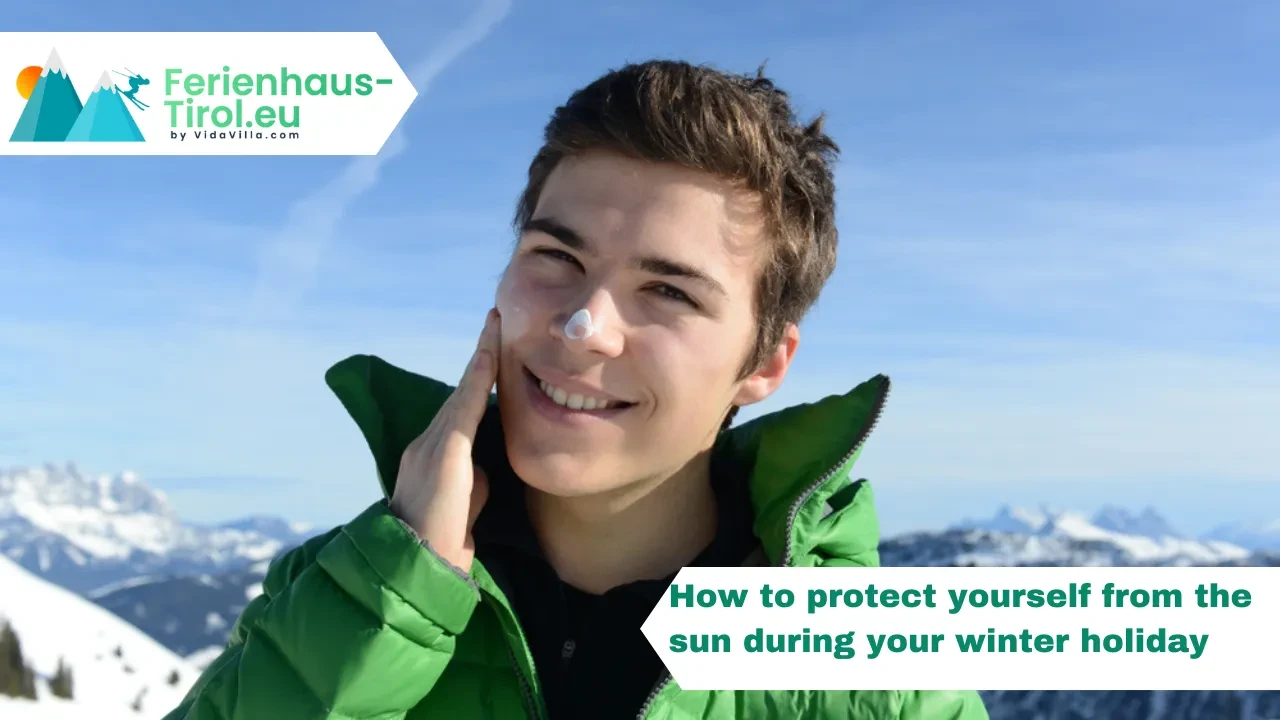
Altitude and snow boost UV levels dramatically. Here’s how to protect your skin and eyes on the slopes.
This blog post was written by René Schwarte, founder of Ferienhaus Tyrol.
Winter holidays feel cold and crisp, yet the sun is surprisingly intense at altitude. The combination of height, dry air and bright snow creates strong UV exposure — often stronger than on a summer beach. Without proper protection, sunburn and eye damage are real risks.
UV is stronger than you think
The World Health Organization (WHO) reports that UV radiation increases by 10–12% for every 1,000 metres of altitude. Snow can also reflect up to 80% of UV light, making UV exposure during winter sports significantly stronger than at sea level. The same applies on cloudy days — clouds hardly block any UV rays.
Source: WHO – Ultraviolet (UV) Radiation
Sunscreen is essential
Use a high-factor sunscreen, ideally SPF 30 or 50. Apply generously before heading out and reapply every few hours. Cold air and wind break down sunscreen more quickly than you might expect.
Don’t forget your lips: a lip balm with a high SPF prevents cracking and sunburn.
A proper UV ski goggle is a must
A ski goggle with 100% UV protection (categories 3 or 4) shields your eyes from glare and prevents snow blindness. Compared to sunglasses, goggles seal better against wind, snow and peripheral light.
Cold and wind make skin more vulnerable
Fresh mountain air feels healthy, but it does make your skin more sensitive to sunlight. Use a rich day cream or a special winter sports cream as a base to prevent your skin from drying out.
A buff or neck warmer will protect your cheeks and chin from the harsh wind—the very areas that burn most easily.
Helmet visors are gaining popularity
More and more winter sports enthusiasts are choosing helmets with integrated visors. Not only because they're comfortable, but also because they offer extra protection. The visor filters UV rays, reduces glare, and fogs up less quickly than separate goggles.
Also read our blog post "Is a Ski Helmet Mandatory in Austria? Rules & Safety Explained"
Clothing can make a big difference
Many technical ski garments have a UPF rating, which blocks a significant portion of UV radiation. Long-sleeved thermal shirts offer extra protection, especially when enjoying lunch on a sunny terrace. Thin shirts or open jackets on warm days do not prevent sunburn.
Hydrate and seek shade
Exertion and high altitude can dry out your skin more quickly. Make sure you drink plenty of water and regularly seek shade. You may also wish to consider staying indoors. This will give your skin a chance to cool down and prevent it from overheating.
Children need extra attention
Your kid burns faster and recovers more slowly. Regular reapplication, a snug-fitting goggle and frequent shade breaks are essential.
Know the warning signs
Exertion and high altitude can dry out your skin more quickly. Make sure you drink plenty of water and regularly seek shade. You may also wish to consider staying indoors. This will give your skin a chance to cool down and prevent it from overheating.
In short, this is how to get safely onto the slopes.
- Apply SPF 30–50 regularly
- Wear UV-protected ski goggles (cat. 3 or 4)
- Protect face and lips from cold, wind and sun
- Stay hydrated and take breaks
- Children need extra careful protection
Read more about your holiday in Austria?
Travelling to Austria by car: vignette, winter tyres & travel tips
Ski Holiday Packing List: the ultimate checklist to avoid packing stress
My name is René Schwarte, founder and co-owner of Ferienhaus-Tirol.eu. With many years of experience in holiday home rentals and deep familiarity with international guest expectations, I understand what makes a vacation truly enjoyable.
Ferienhaus-Tirol.eu offers a wide selection of carefully curated holiday homes, chalets and group accommodations throughout Austria. Whether you're travelling as a couple or with a group of up to 50 people – we help you find the right place with ease.
Our website is available in English, German and Dutch. We speak your language and are happy to assist you with any questions or special requests.
Need help?
Feel free to get in touch – we're here to make your Austrian holiday unforgettable.
Phone: +31854016545 Mail: info@Ferienhaus-Tirol.eu

René Schwarte
Co-OWNER
