A practical guide to an amazing holiday in Austria for beginners
You're looking forward to a week of skiing in Austria with your family or friends, but you're secretly worried about the cost. Winter sports in Austria involve many expenses, from ski passes to accommodation, and it's hard to get an overview.
This blog post was written by René Schwarte, the initiator and co-owner of Ferienhaus-Tirol.eu. Read on for a comprehensive breakdown of all the costs involved in a skiing holiday in Austria, along with practical tips on how to save money, so you can enjoy the snow carefree later on.
Ski lessons in Austria: costs for children and adults
Learning to ski or snowboard is essential for beginners, and even experienced skiers sometimes take lessons to improve their technique. In Austria, you can choose between group and private lessons. Group lessons are cheaper and more intimate: you are with several other students at the same level.
For a five-day group course (usually around four hours per day), expect to pay around €200–€300 per person.
Also read: ski lessons in Austria
Prices for children
Prices for children are often similar or slightly lower; sometimes ski schools even offer discounts for the youngest children. Private lessons are more expensive, but you will learn faster. A private instructor costs around €50–€100 per hour, depending on the ski area and the length of the lesson. For a half-day private lesson (e.g. three hours), you can expect to pay around €150–€300 on average.
Saving tip: book your ski lessons online in advance. Platforms like CheckYeti allow you to compare ski schools and often offer discounts for early bookings. You could also consider taking some lessons in advance at an indoor track in the Netherlands. This is not necessarily cheaper, but it allows you to spread the cost over a longer period.
Ski and snowboard equipment hire (and clothing)
Don't have your own skis or snowboard? No problem — you can hire equipment on site at all Austrian ski resorts. A complete set (skis or a snowboard, poles and boots, and often a helmet) costs an average of €25–€30 per day. Many rental shops offer packages for several days; for example, €150–€250 for six days for an adult.
There are often cheaper rates for children, and sometimes children under a certain age can ski for free on rented equipment if their parents rent (this varies by area). It is usually better to bring your own skiwear. If you don't have everything you need, consider borrowing gear from friends or buying cheap second-hand items, such as ski boots or a ski jacket.
Although it is less common, there are also shops that rent skiwear. Expect to pay roughly €30–€40 per day for a jacket and trousers, but you will often receive a discount for multi-day rentals. Saving tip: Unsure whether to rent or buy? Owning your own equipment can be cheaper in the long run if you go on winter sports holidays every year. Although the initial cost is high, you'll have recouped it after a few holidays.
Food and drink: cooking for yourself versus eating on the slopes
Tasty Austrian cuisine is an integral part of the winter sports experience, but it can come at a hefty price. You can quickly pay an average of €20 for a simple lunch on the slopes or in restaurants. Fortunately, you can keep costs down by planning smartly. Do you have a flat or holiday home? Cooking for yourself can save you a lot of money. Shop at the local supermarket and prepare your own breakfasts and dinners.
For lunch, take a packed lunch with you to the slopes: make some sandwiches in the morning and take a thermos of hot chocolate or soup. This way, you can enjoy your homemade lunch with beautiful mountain views at no extra cost. You could treat yourself to a warm apple strudel or a glass of chocolate milk between meals, but you'll still spend much less than if you ate at the mountain restaurant every day.
Accommodation prices vary between the high and low seasons.
The cost of staying overnight in Austria can vary considerably depending on the type of accommodation, its location, and particularly the time of year. In popular ski villages, prices are considerably higher during the high season (Christmas and spring holidays, for example) than in quieter weeks. Prices for accommodation for six people start at around €800 per week. This is at the lower end of the price range and outside of the high season.
For a mid-range apartment or chalet, expect to pay around €50 per person per night at full occupancy. This equates to approximately €200 per night for a family of four, or around €1,400–€1,500 for a week. This is an indication of the cost of mid-range accommodation outside the busiest weeks.
During the high season, you could easily pay 20–40% more for the same accommodation as in a quieter period. For example, a flat that costs €1,000 in January could cost as much as €1,400–€1,500 during the Crocus holidays.
If you choose accommodation right by the slopes or in the village centre, also take into account a surcharge of around 20–40% compared to accommodation slightly further out of the centre. In contrast, those willing to stay a little further away from the ski area (for example, in a nearby village, with a short drive to the lift each day) can reduce their accommodation costs.
The choice of accommodation
Thus, the choice of accommodation offers scope for savings. A group accommodation can be particularly advantageous: if you share a chalet or holiday home with a large group of friends, for example, you can split the cost.
Be sure to read our tips for renting a group home in Austria.
A large chalet sleeping 10 people, for instance, can cost €2,500 per week, equating to €250 per person — often less than the cost of a small flat per person. Of course, the price depends on the level of luxury and the location: a simple guesthouse or 'gasthof' (guesthouse) is often cheaper than a luxury hotel with wellness facilities.
Ski passes: how much does skiing in Austria cost?
A ski pass gives you access to the lifts and slopes and is often one of the biggest expenses. In Austria, expect to pay around €250–€350 for a six-day adult ski pass, depending on the ski area. On average, the price is around €293 for adults and €150 for children for six days of skiing.
Larger ski areas with hundreds of kilometres of slopes tend to be at the upper end of this range, sometimes even just above it, while smaller, lesser-known areas are cheaper, sometimes costing around €200–€250 for a weekly pass. That's around €60–€70 per day for an adult.
Ski pass for children
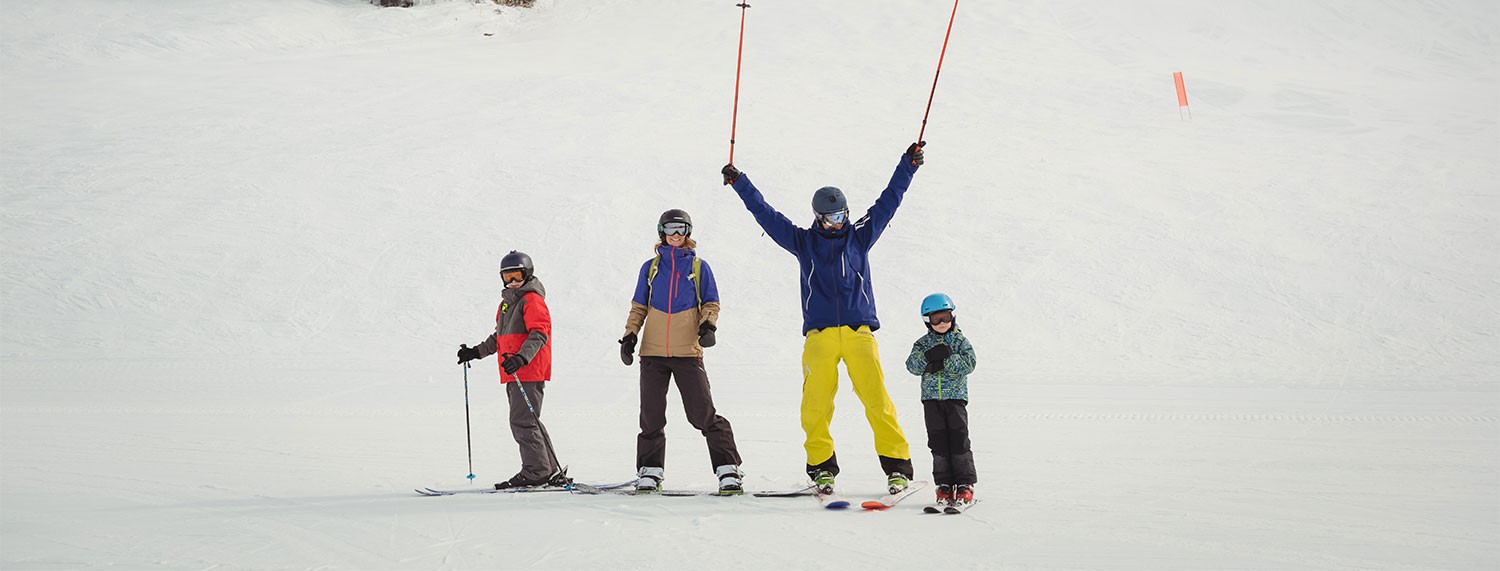
Children get big discounts: younger kids (up to ±12 years) often pay around 50% of the adult price, and for toddlers (up to ±5-6 years) the pass is free in many cases. Some areas offer a family rate or free pass for children in certain weeks (e.g. in the low season). Good to know: more and more ski resorts are using dynamic pricing for ski passes. That means the price can be lower if you buy your pass online far in advance, and higher shortly before departure or on site. It can save you tens of euros per person to order your ski pass a few weeks or months in advance. So check if your ski resort has such a system and take advantage of early booking discounts.
Transport to Austria: car, train or bus?
Travelling costs may vary depending on the means of transport chosen. One option is to travel to Austria by car. Many people travel to the Alps by car. In this case, fuel costs are an important factor.
Toll vignette and snow chains
You will also need to purchase an Austrian toll vignette (approximately €10 for 10 days) and you may have to pay additional tolls for certain motorways or tunnels (e.g. the Brenner Pass costs around €10 one way). Remember that winter tyres are compulsory in Austria (and Germany) during the winter months. If you need to purchase or hire them, this will incur additional costs.
It is also recommended that you have a set of snow chains for snowy mountain roads (buy: ~€60; rent: ~€30), but hopefully you won't need them. If you're travelling with friends or another family, carpooling is a good option: share the car and split the petrol costs – it saves money per person.
Travel to Austria by train
If you prefer to travel by rail, take advantage of the excellent international connections. There are night trains to Innsbruck and Wörgl in Tyrol, and you can change trains to many destinations during the day via Germany (ICE International). Train tickets can often be booked in advance.
Although train travel is comfortable and sustainable, it can be more expensive for a family than travelling by car.
Going to Austria by bus or coach
You can go to Austria by bus or coach. Another option is to go by bus or coach. There are special winter sports bus trips where you leave in the evening and arrive in the Alps the next morning. Single bus tickets from Germany to Austria (e.g. via FlixBus or similar providers) start at around €50–€70 one way per person, depending on the destination and time of travel. A return trip by bus costs around €100–€150 per person. Overall, the bus is often slightly cheaper than the train, and you don't have to drive yourself. Bear in mind, however, that journey times are long and there is less room to move around. Many people choose the night bus to save time (you arrive early the next day).
Is own equipment cheaper than renting?
While owning your own winter sports equipment can be cheaper in the long run, it depends on how often you use it. Suppose you buy your own ski equipment (skis, boots, poles and a helmet) for €600–€800. If you go skiing every year, you'll have recouped that investment within a few years compared to renting all the time (renting similar equipment costs around €150 per week, so you'll break even after about 4–5 weeks of skiing).
However, if you have children, buying equipment can be more difficult as they quickly grow out of their skis and boots. In that case, it is useful to rent or buy/resell second-hand. For occasional skiers (e.g. once every few years), renting is almost always cheaper and more convenient: you avoid the hassle of transporting skis, and you can always rent equipment on site that suits the current snow conditions and your level.
In conclusion, if you go often and can afford it, owning your own equipment is a good investment. For beginners and sporadic skiers, renting is more practical and cheaper.
Is the difference between high and low season really that big?
Yes, the difference in prices between the high and low seasons can be significant. During the high season, which usually coincides with the Christmas/New Year period and the February school holidays, prices for accommodation are often 20% to 50% higher than in quieter weeks. Flights (if you were to fly) and sometimes ski lessons can also be more expensive or fill up more quickly in peak weeks.
Ski passes usually have a fixed rate per season, although some ski resorts have different prices for the high and low seasons, or offer special promotions outside of busy weeks (e.g. free children's passes in January).
A concrete example: a flat that costs €800 in January may cost €1200 or more in the spring holidays, quite a difference for the exact same accommodation. This is why, if you have the opportunity, it pays to go outside school holidays. Not only does it save money, it is also quieter on the slopes and at the lifts. Of course, we understand that families with school-aged children are stuck with school holidays. In that case, you can try to book early (early booking discount) or look at lesser-known areas that are slightly more affordable even in high season, such as a group home in Saalbach-Hinterglemm. But in short: yes, high season vs low season really does make a big difference in price
In a row
Summary
| Accommodation (week) | €800 - €1500 for flat (4-6 pers) - 20%-40% more expensive in high season |
| Ski pass (6 days) | €250 - €350 adult (average €293) and €150 - €175 child |
| Skilessons | Group lessons (5 days, ~4 hours/day): €200 - €300 p.p. - Private lessons: €50 - €100/hour (half-day: €150 - €300) |
| Ski/snowboard equipment rental | €25 - €30/day, ~€150-€250/week |
| Skiwear rental (optional) | ~€30 - €40/day (discount for multiple days) |
| Food & drink | Depending on eating out or in accommodation |
| Transport (car) | Depending on your country/ place of residence |
| Toll vignette: ~€10 | |
| Additional tolls (tunnel, Brenner Pass): ~€20 return | |
| Snow chains for rent/purchase: €30 - €60 | |
| Transport (train) | Depending on your country/ place of residence |
| Transport (bus) | Depending on your country/ place of residence |
Conclusion
On average, you will spend around €600 per person for a week's skiing (including accommodation, a ski pass, equipment hire and food) if you take a smart approach. For a family of four, that quickly adds up to around €2,000–€2,500 in total. Of course, this figure can rise to over €1000 per person if you opt for luxury accommodation, eat out frequently and travel in the high season.
Most importantly, make sure you're well prepared. By planning your budget in advance and making use of tips such as going in the low season, taking advantage of offers and cooking for yourself, you won't face any nasty financial surprises. Winter sports are an investment, but one that creates unforgettable memories. Want to make sure you get the most out of your budget? Then start preparing now. Compare ski lessons, for example, and book cheaply via CheckYeti.
Please note that you cannot derive any rights from the above blog. Please check the current legislation and rules carefully.
Holiday homes Austria: a selection
On holiday to Austria
My name is René Schwarte, founder and co-owner of Ferienhaus-Tirol.eu. With many years of experience in holiday home rentals and deep familiarity with international guest expectations, I understand what makes a vacation truly enjoyable.
Ferienhaus-Tirol.eu offers a wide selection of carefully curated holiday homes, chalets and group accommodations throughout Austria. Whether you're travelling as a couple or with a group of up to 50 people – we help you find the right place with ease.
Our website is available in English, German and Dutch. We speak your language and are happy to assist you with any questions or special requests.
Need help?
Feel free to get in touch – we're here to make your Austrian holiday unforgettable.
Phone: +31854016545 Mail: info@Ferienhaus-Tirol.eu

René Schwarte
Co-OWNER
